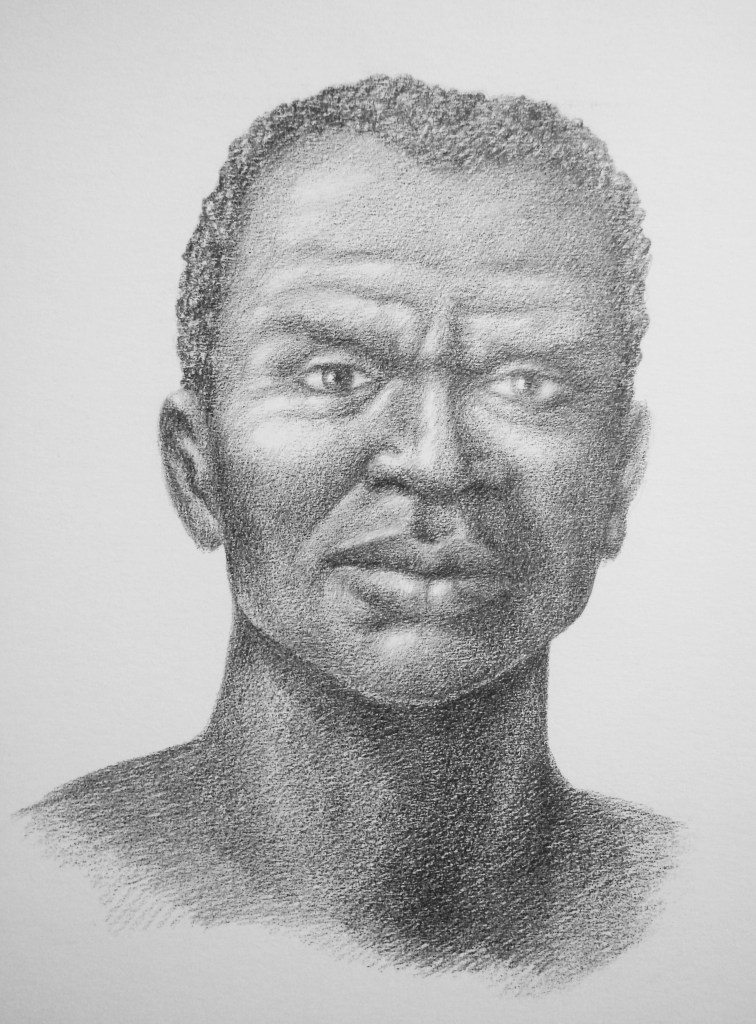
King Zumbi (1655–November 20, 1695), also known as Zumbi dos Palmares, was an Afro-Brazilian of Bantu/Kongo origin and a Quilombo King, being one of the pioneers of resistance to slavery of Africans by the Portuguese in Brazil. He was also the last of the kings of the Quilombo dos Palmares, a settlement of Afro-Brazilian people who had liberated themselves from enslavement in that same settlement, in the present-day state of Alagoas, Brazil. He was married to the queen and also great warrior Dandara. Dandara was also an Afro-Brazilian warrior of the colonial period of Brazil and was part of the Quilombo dos Palmares.
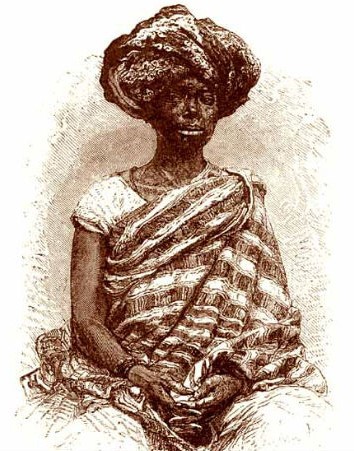
A warrior in the colonial period of Brazil, Dandara was the wife of Zumbi, the leader of the Quilombo of Palmares. With him, Dandara had 3 children: Motumbo, Harmodio, and Aristogiton. Valiant, she was one of the Black women leaders who fought against the system of slavery in the 17th Century and helped Zumbi in the strategies and plans of attack and defense of the quilombo*.
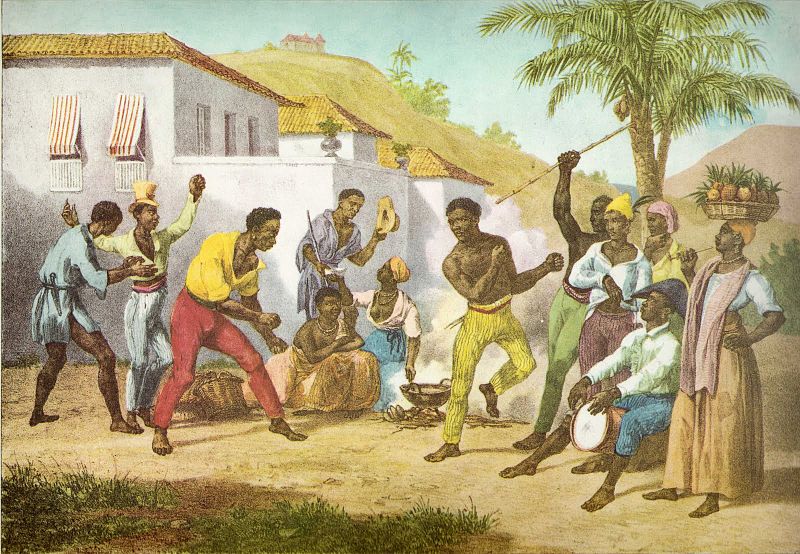
Quilombo Palmares was a Kingdom established around 1605 by 40 run away central Africans Bantu slaves who fled to the heavily forested hills that parallel the northern coast of Brazil, their intentions being to unite escaped slaves to freedom. Quilombo was inspired by a Bantu Luba name ‘Tchilombo’, members of Quilombos often returned to plantations or towns to encourage their former fellow African slaves to flee and join them, and if necessary, they’d take others by force and sabotaged plantations. Anyone who came to quilombos on their own free will was considered free, but those who were captured and brought by force were considered slaves and continued to be so in the new settlements, and they could be considered free if they were to bring another captive to the settlement, many black women fled the plantations and voluntarily come to Palmares to escape abusive masters, some white women to escape their spouses. Quilombo dos Palmares was a self-sustaining kingdom, a region perhaps the size of Portugal in the hinterland of Pernambuco. At its height, Palmares had a population of more than 30,000 free people. Palmares developed into a confederation of 11 towns, spanning rugged mountainous terrain in frontier zones across the present day states of Alagoas and Pernambuco. Palmares was an autonomous state based on Bantu political and spiritual customs that supported itself through means of agriculture, fishing, hunting, gathering, trading, and raiding nearby Brazilian plantations and settlements. Palmares was home to not only escaped enslaved Africans, but also to mulattos, caboclos, Indians and poor whites, especially Portuguese soldiers trying to escape forced military service.

Zumbi’s mother Sabina and her relatives were made slaves and brought to the Americas after the Battle of Mbwila, between the Kongo Kingdom and Portugal. When the Portuguese won the battle eventually, killing 5000 men, and captured the king, his two sons Ganga Zumba and Zona, his daughter Sabina, his two nephews, four governors, various court officials, 95 title holders and 400 other nobles who were put on ships and sold as slaves in the Americas. The whereabouts of the rest of the individuals captured after the Battle of Mbwila is unknown, some are believed to have been sent to Spanish America and elsewhere, but the two brothers Ganga Zumba, Zona and their sister Sabina were made slaves at the plantation of Santa Rita in the Captaincy of Pernambuco in what is now northeast Brazil. From there, they escaped to Palmares where Sabina gave birth to Zumbi, and there her and her brothers built the Kingdom of Quilombo Palmares; with her brother Zumba as the King. At approximately 6 years old, Zumbi was captured by the Portuguese and given to a missionary; where he was unconsented baptized and given the name of Francisco. Zumbi was taught the sacraments, learned Portuguese and Latin, but despite attempts to subjugate him, Zumbi escaped in 1670 and at the age of 15 returned to his birthplace.

Zumbi became known for his physical prowess and cunning in battle and he was a respected military strategist by the time he was in his early twenties and was appointed commander in chief of the Kingdom forces in 1675, and by 1678 the governor of the captaincy of Pernambuco, Pedro Almeida, weary of the longstanding conflict with Palmares, approached its king Ganga Zumba with an olive branch, offering freedom for all runaway slaves if Palmares would submit to Portuguese authority, a proposal which Ganga Zumba favoured, but Zumbi was distrustful of the Portuguese and further refused to accept freedom for the people of Palmares while other Africans remained enslaved, he rejected Almeida’s overture and challenged his uncle’s Ganga Zumba’s kingship. In 1678, Zumbi killed his uncle and sought to implement a far more aggressive stance against the Portuguese, vowing to continue the resistance to Portuguese oppression, Zumbi became the new king of Palmares in 1679. Predictably, when Zumbi gained authority, tensions with the Portuguese quickly escalated, and though there were various attacks from the Portuguese, he was fiercely successful against them killing Portuguese in thousands for 15 years, his determination and heroic efforts to fight for Palmares’ independence increased his prestige and inspired many slave to join his Kingdom.
In 1694, the Portuguese colonists under the military commanders Domingos Jorge Velho and Bernardo Vieira de Melo launched an assault on the Quilombo Palmares, they made use of artillery as well as a fierce force of Brazilian Indian fighters to strengthen their army, the battle took 42 days of war. On February 6, 1694, after 67 years of ceaseless conflict with Palmares, the Portuguese succeeded in destroying Cerca do Macaco, the kingdom’s central settlement. Some resistance continued, but on November 20, 1695 King Zumbi was killed and decapitated, his head displayed on a pike to dispel any legends of his immortality. Queen Dandara committed suicide after being arrested on February 6, 1694, refusing to return to a life of slavery. Queen Dandara and King Zumbi had three children, and although the Kingdom was eventually crushed, the success of Palmares through most of the 17th century greatly challenged colonial authority and would stand as a beacon of slave resistance in the times to come.
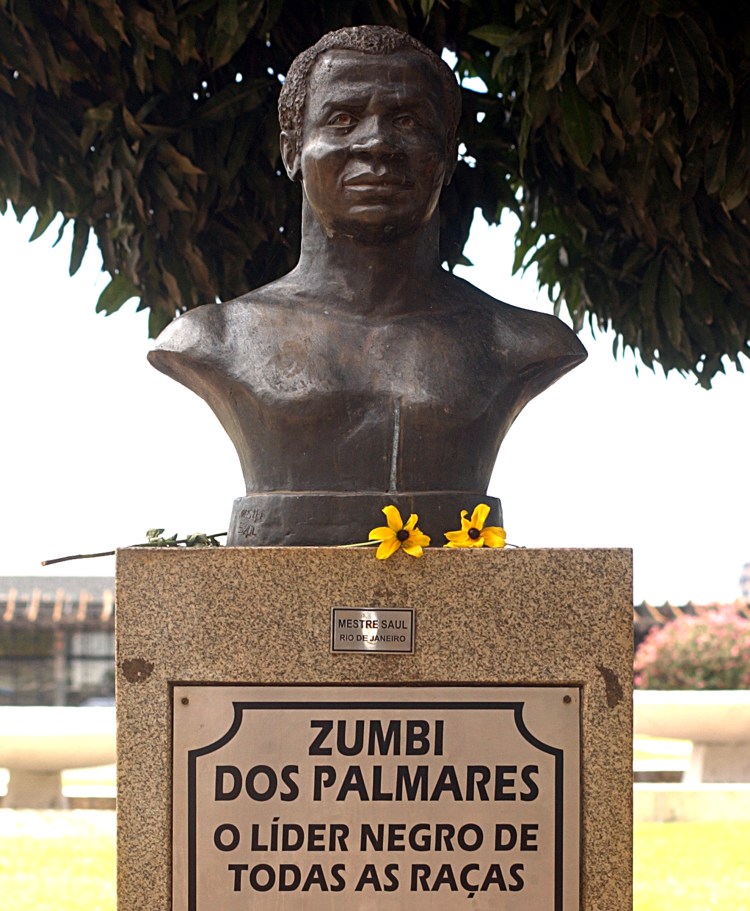
November 20 is celebrated, chiefly in Brazil, as a day of Afro-Brazilian consciousness, the day has special meaning for those Brazilians of African descent to honour Zumbi as a hero, a freedom fighter, and a symbol of freedom. Zumbi has become a hero of the 20th-century Afro-Brazilian political movement, as well as a national hero in Brazil. Today, Zumbi is considered a hero of great magnitude amongst Afro-Brazilians who celebrate his courage, leadership qualities, and heroic resistance to Portuguese colonial rule.
Discover more from BANTU=BIBLICAL ISRAELITES
Subscribe to get the latest posts sent to your email.
 BANTU=BIBLICAL ISRAELITES